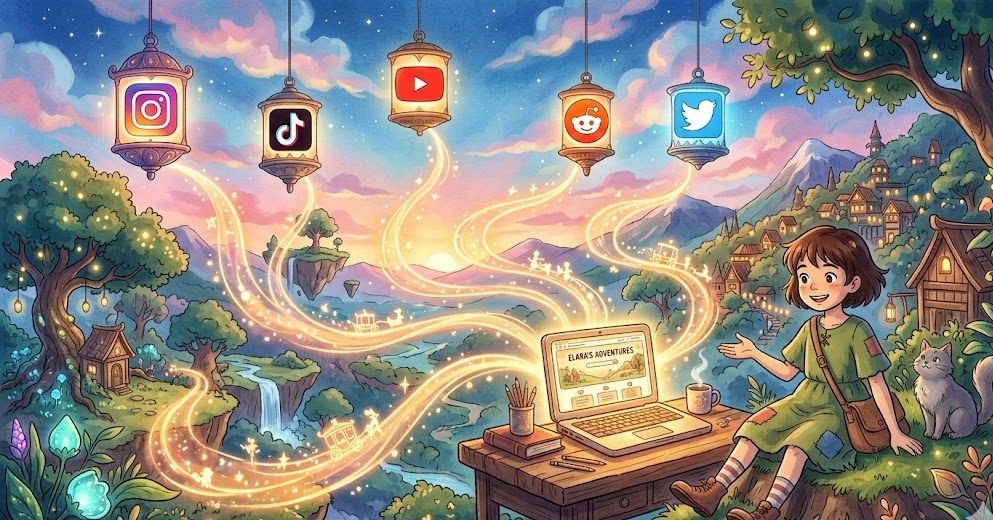
What if you could build a multi-million dollar business without spending a single penny on advertising? It sounds like a marketing myth, yet in 2026, some of the highest-earning affiliate marketers rely entirely on organic reach rather than paid ads. While giants like Google and Meta make billions from their ad platforms, a growing counter-culture of “Zero-Budget” entrepreneurs is proving that attention is the new currency, and it can be earned through sweat equity rather than a credit card.
The primary challenge for most beginners is the “Budget Barrier.” You find a great affiliate product, but you realize that running Facebook or Google Ads requires a daily spend that could quickly drain your savings before you see a single commission. This financial pressure leads to desperate, spammy tactics that get accounts banned. The ultimate solution is mastering Free Traffic Ecosystems—leveraging platforms that want your content to succeed because it keeps users on their site. This guide will provide a roadmap to the most effective free traffic sources in 2026, explaining the core fundamentals, the long-term benefits, and a step-by-step plan to turn “views” into “revenue.”
Understanding Free Traffic: Key Concepts and Importance
In the world of affiliate marketing, traffic is essentially the flow of human attention toward your offers. Free Traffic (often called Organic Traffic) refers to visitors who find your content through search engines, social media algorithms, or community recommendations without you paying for the click. Historically, this was limited to slow-moving SEO blogs, but in 2026, the landscape has shifted toward high-velocity discovery engines.
Think of free traffic like planting a fruit orchard. Paid traffic is like buying fruit from a grocery store: it’s instant, but the moment you stop paying, the fruit disappears. Free traffic requires you to dig the holes, plant the seeds, and nurture the trees (creating content). It takes time, but eventually, the orchard produces fruit automatically, season after season, for free. The technical core of this is the Algorithm. Platforms like TikTok, Pinterest, and YouTube use AI to match your content with the people most likely to be interested in it. Your job isn’t to “sell,” but to provide the Data Signals (keywords, engagement, and value) that tell the algorithm exactly who your ideal customer is.
Why It Matters: The Top Benefits of Organic Traffic
Relying on free traffic sources isn’t just a way to save money; it’s a way to build a more resilient and profitable business model.
- High-Profit Margins: Without an “Ad Spend” line item in your budget, your affiliate commissions are almost pure profit. This allows you to reinvest in better tools or simply enjoy a higher take-home pay.
- Compounding Authority: Organic content lives forever. A YouTube video or a blog post created today can continue to drive traffic and commissions in 2029. Paid ads, however, die the second the budget hits zero.
- Enhanced Trust and Credibility: Users are generally more skeptical of “Sponsored” posts. When a visitor finds you through an organic search or a helpful community thread, they perceive you as an authority rather than a salesperson.
- Sustainability: Relying on paid ads makes you vulnerable to “Ad Fatigue” and rising click costs. Organic traffic allows you to build a community that stays with you regardless of market fluctuations.
Pro Fact: In 2026, organic search and social discovery still account for over 65% of all e-commerce traffic, proving that people still prefer finding solutions naturally over being targeted by ads.
How to Get Started: A Practical Guide for Beginners
To dominate free traffic in 2026, you must go where the “Organic Reach” is highest. Here is your 5-step actionable plan:
1. Leverage Short-Form Vertical Video (TikTok & Reels)
In 2026, TikTok and Instagram Reels remain the most powerful “discovery engines.” Create 15-30 second clips that solve a specific problem. For example, if you are an affiliate for a productivity app, show a “Day in the Life” using the app to save 2 hours of work.
2. Utilize Pinterest for Visual Search
Pinterest is not just social media; it is a visual search engine. Create “Pins” that lead to helpful guides. Pinterest traffic is incredibly high-intent, meaning users are often looking for products to buy or projects to start.
3. Answer Questions on Niche Communities (Quora & Reddit)
Find people who are actively asking for help in your niche. Provide a 500-word, high-value answer. Only mention your affiliate product if it is a genuine solution, and ideally, link to a bridge page or a blog post rather than a raw affiliate link to avoid being flagged as spam.
4. Master “Low-Competition” SEO
Don’t try to rank for “Best Laptop.” Instead, target Long-Tail Keywords like “Best budget laptop for architecture students 2026.” Use free tools like Google Trends to find rising questions that no one has answered yet.
5. Build an “Owned” Audience via Newsletters
The ultimate “free” traffic source is your own Email List. Use your social media traffic to offer a free “Cheatsheet” or “Template” in exchange for an email address. Once they are on your list, you can send them affiliate offers for free, forever.
Beginner’s Tip: Don’t try to master five platforms at once. Pick one primary traffic source (e.g., YouTube) and one secondary source (e.g., Pinterest) and stay consistent for 90 days before adding more.
Overcoming Challenges and Looking into the Future
The biggest challenge with free traffic is the “Time Gap.” It can take weeks or months to see your first commission. To solve this, focus on Volume and Velocity. In 2026, the algorithms favor those who post frequently and use the latest features (like interactive polls or AI-enhanced visuals).
Looking toward the future, we are seeing the rise of “Search Generative Experiences” (SGE). By 2027, AI will summarize your content directly in search results. To stay relevant, your content must provide Unique Human Insights—personal stories, original photos, and “boots-on-the-ground” testing—that an AI cannot replicate. The future of free traffic is Hyper-Personalization, where your brand becomes the trusted filter in an ocean of AI noise.
Conclusion
The best free traffic sources for affiliate marketing are those that reward value over volume. Whether you choose the viral potential of TikTok, the search-intent of Pinterest, or the authority of a niche blog, the key is to stop acting like a marketer and start acting like a resource. By building an orchard of organic content today, you are securing a harvest of passive commissions for years to come.
Your next step: Choose one platform where you already spend time. Identify three common “pain points” in your niche and create three short videos or posts answering those problems today.
Stop waiting for a budget and start building your audience.
FAQs
1. Is “Free Traffic” truly free? Technically, it costs time instead of money. While you don’t pay for clicks, you must “pay” with the effort required to create high-quality content that platforms want to promote.
2. Which platform is the fastest for beginners? In 2026, TikTok and YouTube Shorts offer the fastest path to “viral” reach for accounts with zero followers, thanks to their interest-based algorithms.
3. Do I need a website to use free traffic? Not necessarily, but it is highly recommended. Using a “Bridge Page” or a simple blog allows you to capture emails and prevents social media platforms from banning your affiliate links.
4. How often should I post to get results? For social discovery (TikTok/IG), aim for once a day. For search-based platforms (YouTube/Blog), 1–2 times a week is sufficient as long as the quality is exceptionally high.