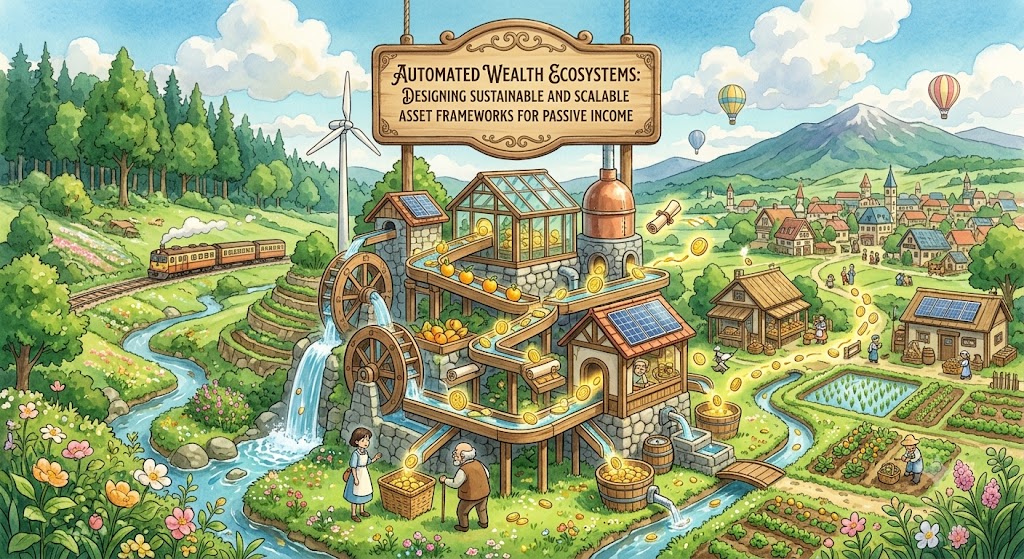
The concept of passive income has evolved significantly in the digital age. While many people imagine passive income as earning money without effort, the reality is quite different. Sustainable passive income is usually the result of carefully designed systems, valuable assets, and strategic automation that continue generating revenue long after the initial work has been completed.
Successful wealth builders rarely depend on a single income source. Instead, they create interconnected asset ecosystems that produce recurring cash flow from multiple channels. These systems are designed to operate efficiently, scale over time, and reduce reliance on active labor. Whether through digital products, investments, intellectual property, online businesses, or automated services, modern technology has made it easier than ever to build income-generating assets that work around the clock.
This guide explores how automated wealth ecosystems function and how individuals can design sustainable, scalable frameworks that support long-term financial growth and passive income generation.
Understanding the Concept of Automated Wealth Ecosystems
An automated wealth ecosystem is a collection of income-producing assets, systems, and processes that work together to generate revenue with limited ongoing intervention.
Rather than depending entirely on earned income from a job or business, these ecosystems focus on asset ownership and automation.
Characteristics of Wealth Ecosystems
- Multiple revenue streams
- Automated operations
- Scalable business models
- Long-term sustainability
- Asset-based income generation
- Continuous optimization
The goal is to create financial systems that continue producing value even when direct involvement is reduced.
Why Passive Income Matters
Traditional income models typically require trading time for money.
Passive income offers several advantages:
Key Benefits
- Financial flexibility
- Income diversification
- Reduced dependence on a single source
- Greater long-term wealth potential
- Improved financial security
- Enhanced lifestyle freedom
While passive income requires effort to build, it can provide significant long-term rewards.
The Foundation: Building Valuable Assets
Every successful wealth ecosystem begins with assets.
Assets are resources that generate value and produce income over time.
Common Income-Producing Assets
- Digital products
- Investment portfolios
- Rental properties
- Intellectual property
- Online businesses
- Membership platforms
- Educational content
- Software applications
The strength of a wealth ecosystem depends largely on the quality and scalability of its underlying assets.
Digital Products as Scalable Assets
Digital products have become one of the most accessible asset classes for modern entrepreneurs.
Examples include:
- E-books
- Templates
- Online courses
- Toolkits
- Guides
- Digital downloads
Benefits of Digital Products
- Low distribution costs
- Global reach
- High scalability
- Automated delivery
Once created, digital products can generate revenue repeatedly without requiring physical inventory.
Content Platforms as Long-Term Assets
Content can function as a powerful asset when it attracts audiences consistently.
Popular content platforms include:
- Blogs
- YouTube channels
- Podcasts
- Newsletters
- Educational websites
Revenue Opportunities
- Advertising
- Sponsorships
- Affiliate marketing
- Product sales
- Membership programs
Quality content often compounds in value over time as audiences grow.
Membership and Subscription Models
Recurring revenue is a key component of many successful wealth ecosystems.
Membership programs may provide:
- Exclusive content
- Community access
- Educational resources
- Ongoing support
Advantages
- Predictable cash flow
- Higher customer lifetime value
- Improved business stability
Recurring revenue often provides a strong financial foundation for long-term growth.
Intellectual Property and Licensing
Knowledge and creativity can become valuable assets when properly packaged and protected.
Examples include:
- Training programs
- Proprietary frameworks
- Educational materials
- Software tools
- Research reports
Benefits of Licensing
- Scalable income opportunities
- Reduced operational demands
- Broader market reach
Intellectual property can continue generating revenue long after development.
Investment Assets for Long-Term Growth
Investment-based assets are another important component of wealth ecosystems.
Examples may include:
- Dividend-paying stocks
- Bonds
- Real estate investments
- Index funds
- Business ownership interests
Benefits
- Capital appreciation potential
- Passive cash flow
- Portfolio diversification
Investments can complement business-generated income streams.
The Role of Automation
Automation is what transforms individual assets into efficient wealth-generating systems.
Common Areas for Automation
- Sales processes
- Marketing campaigns
- Customer onboarding
- Product delivery
- Payment processing
- Reporting systems
Automation reduces manual workload while improving consistency and scalability.
Creating Revenue Stream Diversification
One of the greatest risks in wealth building is dependence on a single source of income.
Why Diversification Matters
- Reduces financial risk
- Improves income stability
- Increases growth opportunities
- Enhances resilience during market changes
A diversified ecosystem is often more sustainable than a single-income model.
Building Systems Instead of Jobs
Many individuals unintentionally create businesses that depend entirely on their personal involvement.
Wealth ecosystems focus on systems rather than constant labor.
Characteristics of System-Based Models
- Documented processes
- Repeatable workflows
- Automation tools
- Delegation opportunities
- Scalable operations
Systems create leverage by allowing assets to operate more independently.
Leveraging Technology for Scale
Technology has dramatically expanded opportunities for asset creation and automation.
Useful technologies include:
- E-commerce platforms
- Learning management systems
- Customer relationship management tools
- Email marketing software
- Analytics platforms
- Artificial intelligence tools
Technology helps increase efficiency while supporting business growth.
Monitoring and Optimization
Even automated systems require periodic evaluation.
Key Metrics to Track
- Revenue growth
- Customer acquisition
- Retention rates
- Asset performance
- Operating costs
Regular analysis helps identify opportunities for improvement and expansion.
Avoiding Common Passive Income Myths
Many misconceptions surround passive income.
Myth 1: Passive Income Requires No Work
Most successful passive income systems require significant upfront effort.
Myth 2: One Asset Is Enough
Diversification often improves long-term stability.
Myth 3: Automation Eliminates Management
Periodic oversight remains important for sustained success.
Understanding these realities helps set realistic expectations.
Long-Term Wealth Building Principles
Successful wealth ecosystems are built over time rather than overnight.
Core Principles
- Consistency
- Patience
- Asset ownership
- Strategic reinvestment
- Continuous improvement
Long-term thinking often produces stronger financial outcomes than short-term strategies.
Scaling Wealth Ecosystems
Once foundational assets are performing well, expansion opportunities may include:
- New products
- Additional markets
- Strategic partnerships
- Licensing opportunities
- Technology upgrades
Scaling should be approached strategically to maintain quality and sustainability.
Common Mistakes to Avoid
Many aspiring wealth builders encounter challenges that slow progress.
Frequent Errors
- Lack of diversification
- Overreliance on one platform
- Weak automation systems
- Poor financial management
- Ignoring customer needs
Avoiding these mistakes can improve long-term success.
Frequently Asked Questions
1. What is an automated wealth ecosystem?
An automated wealth ecosystem is a collection of income-producing assets and systems that generate revenue through automation and strategic management.
2. Is passive income truly passive?
Most passive income streams require upfront work and occasional maintenance, but they can reduce dependence on active labor over time.
3. What types of assets generate passive income?
Digital products, investments, content platforms, memberships, intellectual property, and online businesses are common examples.
4. Why is diversification important?
Diversification reduces risk and helps create more stable and resilient income streams.
5. How does automation support wealth building?
Automation improves efficiency by handling repetitive tasks such as sales, marketing, customer service, and product delivery.
Conclusion
Automated wealth ecosystems represent a modern approach to building sustainable and scalable passive income. By combining valuable assets, strategic automation, diversified revenue streams, and long-term planning, individuals can create financial systems that continue generating income beyond the limits of traditional time-for-money models.
While developing these ecosystems requires effort, patience, and careful execution, the long-term benefits can be substantial. Asset ownership, recurring revenue, automation, and continuous optimization provide a strong foundation for financial growth and resilience. By focusing on building systems rather than simply earning income, individuals can create wealth-generating frameworks that support lasting financial success.
Explore more helpful articles on our website for additional personal finance insights, digital business strategies, and wealth-building resources.