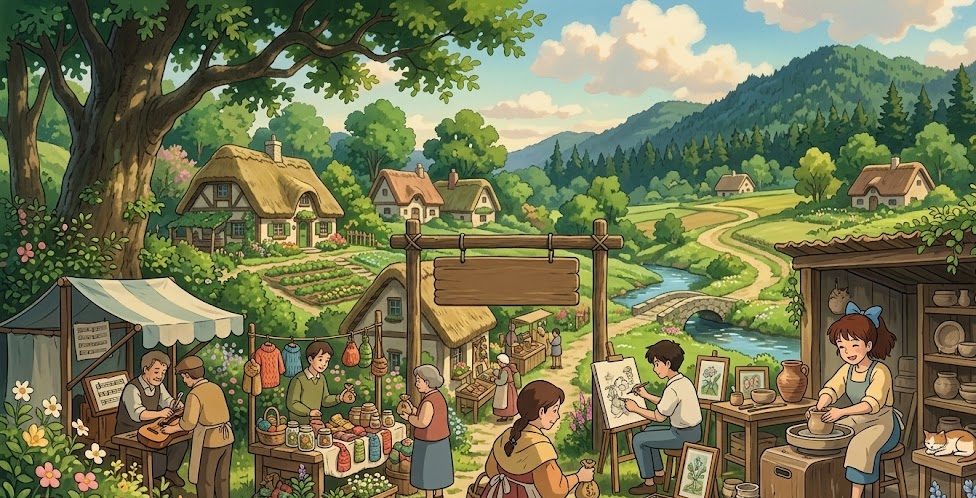
The barrier to entry for building a business has never been lower. We are currently living in the era of the “Creator Economy”—a multi-billion dollar ecosystem where your unique skills, knowledge, and creative output can be packaged, distributed, and monetized directly to an audience.
Whether you are a developer, a farmer, a designer, or a consultant, the shift from “employee” to “creator” is the most significant professional transition you can make. This guide will show you how to move from sporadic side-hustling to building a predictable, sustainable monthly income stream.
1. Defining Your “Creator Niche”
The common mistake most people make is trying to be “everything to everyone.” In the Creator Economy, specificity is the key to profitability. Don’t just be a “coder”; be the developer who builds automated tools for small-scale farmers. Don’t just be a “writer”; be the expert on sustainable agriculture for urban micro-farmers. By narrowing your focus, you don’t just gain followers—you gain a community that trusts you to solve their specific problems.
2. The Value Ladder: How to Package Your Knowledge
To generate a monthly income, you must provide value that goes beyond free content. Think of your monetization strategy as a “Value Ladder”:
- Free Tier (Acquisition): Your blog, social media presence, or free tutorials. This is where you build trust and showcase your expertise.
- Low-Ticket Tier (Accessibility): E-books, templates, checklists, or small digital toolkits. These should be priced low ($10–$50) to encourage the first transaction and transition followers into customers.
- Mid-Ticket Tier (Utility): Online courses, specialized software-as-a-service (SaaS) subscriptions, or comprehensive guides. These offer structured transformation.
- High-Ticket Tier (Personalized Access): One-on-one consulting, private mastermind groups, or custom service packages. This is where you trade your deep expertise for premium compensation.
3. Creating Predictable Revenue: The Membership Model
The “holy grail” of the Creator Economy is recurring revenue. When you move away from one-off sales and toward subscriptions, you gain the ability to forecast your income and invest in the growth of your business.
- Paid Newsletters: Platforms like Substack allow you to monetize your insights directly. If you have a specific expertise, people will pay for the curation and clarity you provide.
- Community Platforms: Build a private space (using tools like Discord or dedicated community platforms) where members pay a monthly fee for access to you, your network, and exclusive resources.
- SaaS/Micro-Tools: If you can build a simple tool—like a custom calculator, a task-management template, or a bot—you can charge a monthly subscription fee for its utility.
4. The Tech Stack: Building Your Platform
You don’t need a massive team to run a creator business. You need a streamlined “stack” that automates as much as possible:
- Content/Traffic Engine: LinkedIn, Twitter/X, or a personal blog. Use these to document your work and attract your audience.
- Payment Processing: Stripe or similar gateways are essential. Keep the friction between your customer’s credit card and your bank account as low as possible.
- Distribution: Use platforms that handle digital delivery for you (like Gumroad or LemonSqueezy) so you don’t have to manually email files to customers.
- Community Management: A place to interact with your “superfans.”
5. From Passion to Process
The biggest reason creators fail is not a lack of talent—it’s a lack of consistency. If you want a monthly income, you must treat your creativity like a business, not a hobby.
- The Content Calendar: Plan your output. If you produce high-quality work on a schedule, your audience will come to rely on you.
- The Feedback Loop: Pay attention to what your audience asks for. Your next product should be the solution to the most common question you receive in your DMs.
- The “Build in Public” Approach: Share your progress, your wins, and even your failures. People love to support a journey. When you show the process of building your “EarnEasy” app or your “CashFlow” dashboard, you are building a story that people want to be a part of.
6. Avoiding the Burnout Trap
Monetizing your passion can sometimes strip the joy out of it. To keep the fire alive:
- Automate the Mundane: Spend your time on the high-value creative work—writing, building, teaching. Automate the admin—invoicing, email reminders, and basic customer support.
- Protect Your Time: Don’t promise “infinite access.” Set boundaries for when you are available for consulting or community interaction.
- Focus on Quality over Quantity: You don’t need a million followers. You need a thousand “true fans” who value your work enough to pay for it every month.
Final Thoughts: The Ownership Economy
The Creator Economy is fundamentally about ownership. When you build a business based on your own skills and your own audience, you are no longer dependent on a single employer. You are building an asset that grows in value over time.
Start today. Identify the one skill you have that others find difficult. Package that solution into a small, digital offer. Put it in front of your audience. Listen to their feedback. Iterate.
In 2026, the question isn’t “Is it possible to make money online?” The question is “What value are you creating, and how will you package it?” You have the tools, the platforms, and the audience. Now, it’s just about showing up and delivering.